Equipment idle for months? What you need to know before reactivating your cylinders
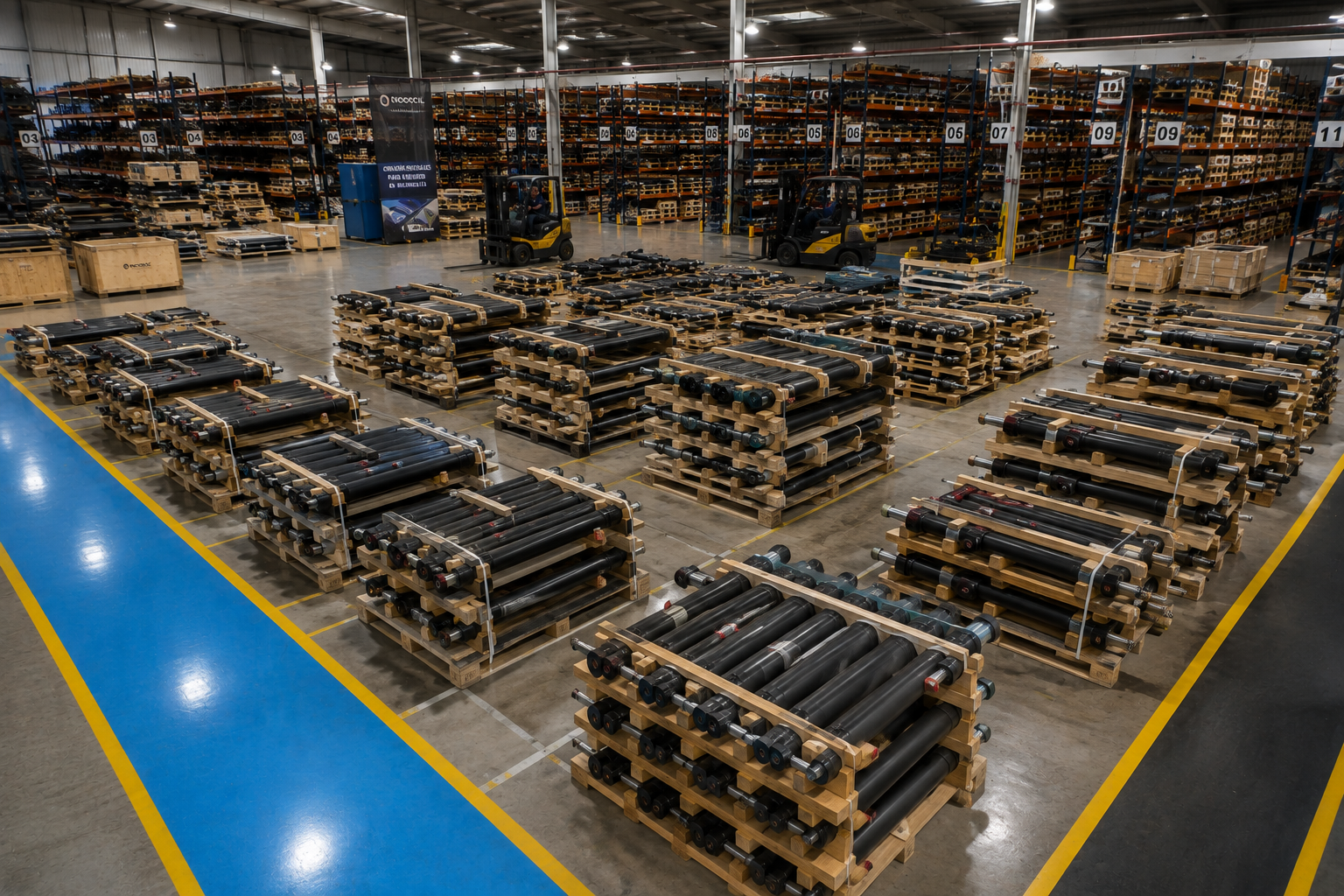
Has your hydraulic equipment been idle in the yard for six months or more? Stored cylinders can suffer slow seal degradation and internal corrosion. Learn how to store and what to check before restarting.
Your hydraulic equipment has been sitting in the yard for six months or more. When the time comes to use it, you start the machine and the cylinder doesn't work, leaks oil, or locks up completely.
This is not a manufacturing defect. It is what can happen when hydraulic cylinders remain idle without specific care.
To many, this is obvious. To others, especially those who do not routinely deal with prolonged storage, it can be an unpleasant surprise. Complete equipment with oil-filled cylinders or spare cylinders waiting in storage seem harmless. But they are not.
What happens when cylinders sit idle
Hydraulic cylinders are engineered to operate under hydraulic pressure, continuous and uninterrupted movement. When idle, the physics change entirely.
Without movement, circulating pressure, flow, or friction, cylinders undergo slow degradation that you cannot see until you try to reuse them. And when you try to reactivate, it might be too late.
Three risks that happen in practice
1. Seals stick to the cylinder
Seals and elastomers have a property called stress relaxation under load. When a cylinder sits idle for a long time, the seals (which normally move continuously) undergo molecular adhesion to the metallic parts.
The result? When you try to reactivate, the seals are permanently damaged, causing leaks after restart.
This is especially severe in humid climates or with significant thermal swings, which accelerate the process.
2. Rod weight can permanently deform seals
When a cylinder is stored for a long period in the same horizontal position, the weight of the rod constantly presses down on a single position of the seals.
Over months, this motionless pressure can cause permanent deformation. Seals lose their original shape. Upon reactivation, oil leaks immediately because the seal can no longer hold pressure.
Consequence: immediate leakage or pressure loss when you try to use it again.
3. Humid air causes silent internal corrosion
If air remains inside the cylinder (whether because it has not yet been assembled on the machine, stored as spare inventory, or is a single-acting model stored retracted), ambient humidity is a problem.
In humid climates or with temperature variations, this air can reach its dew point—the temperature at which moisture condenses. Water deposits onto internal metallic surfaces, causing rust and localized pitting.
This risk is especially high in single-acting cylinders stored or mounted retracted. The return chamber stays filled with air for long periods, and internal oxidation damages the seals without you noticing.
Consequence: progressive corrosion, shortened seal lifespan, potential seizure or external leaks upon returning to service.
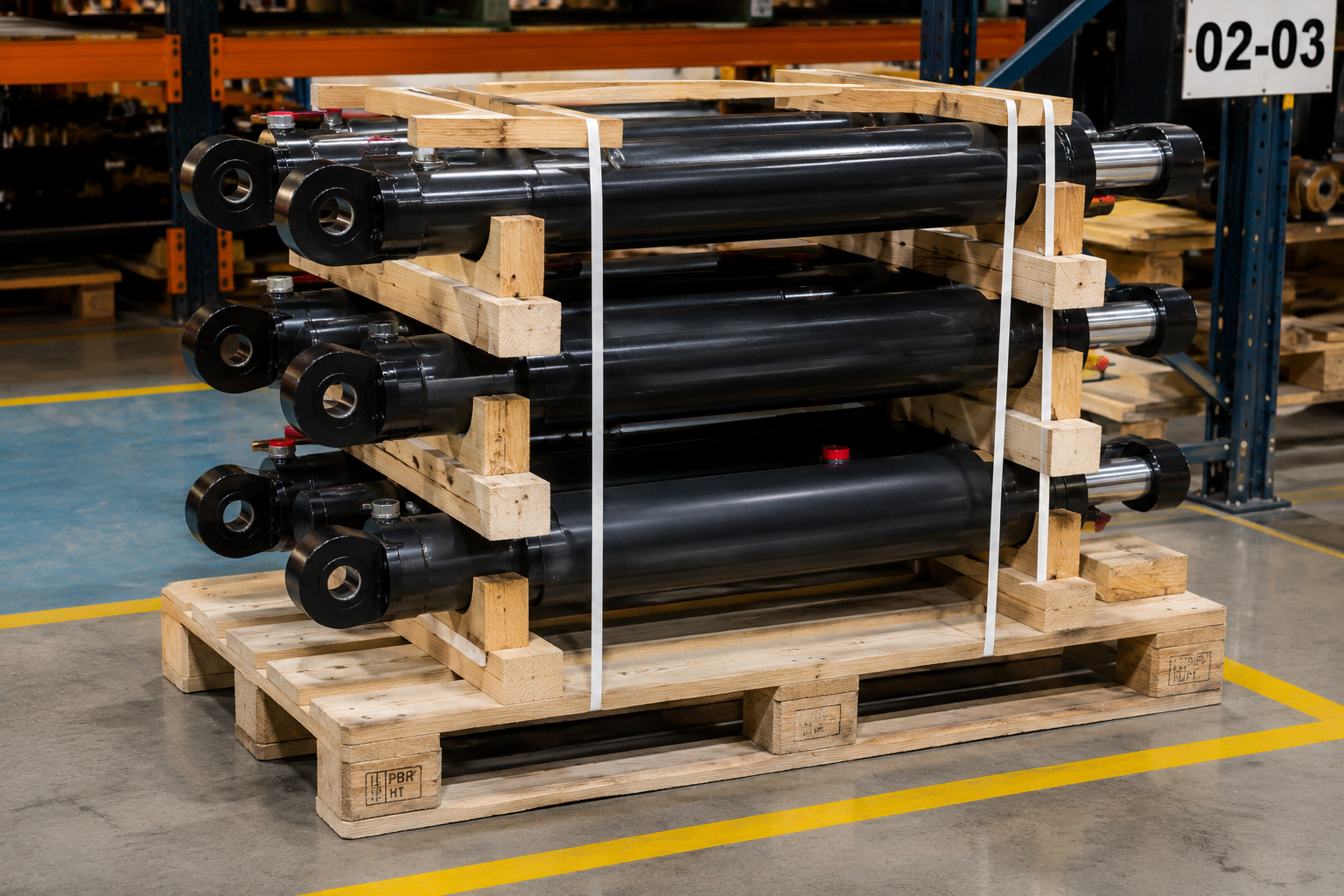
How to reduce these risks: what really works
If your cylinders (stored or mounted) will be idle for an extended period, specific actions can make a real difference.
For storage up to 3 months
A dry and covered area is a mandatory minimum. Protect chrome-plated rod surfaces against impacts. Keep cylinders with appropriate port plugs on all connectors. Simple, but effective.
For storage from 3 to 6 months
Follow everything above. Add grease protection to internal surfaces of bushings, spherical bearings, and mounts (especially steel). If stored horizontally, consider rotating the rod manually or repositioning the cylinder every 2 to 3 months. This redistributes load and reduces seal deformation. It is simple manual work that can save cylinder reactivation.
For storage over 6 months
The risk can be higher. If possible, consider filling the cylinder with hydraulic oil. Fill through the rod-end port with the cylinder fully retracted. Assess whether the storage environment temperature fluctuates greatly, as this could cause thermal expansion even in oil-filled cylinders.
But the most important recommendation here is: perform technical validation before reactivating. It is not a luxury; it is insurance against far more costly failures.
What technical validation really prevents
- Internal visual inspection: checks for signs of corrosion, deformation, or physical damage not visible from outside.
- Pressure testing: verifies that seals still perform their sealing function properly. Leaks appear immediately on the bench, not in the field.
- Functional evaluation: confirms that the cylinder operates according to original specifications.
What we see in practice
In our experience with customers who keep cylinders in prolonged storage (industrial, transport, agriculture, mining, forestry), we see repeating patterns.
Cylinders idle for several months frequently show minor seal damage. Cylinders kept horizontally for long periods develop leaks. Single-acting cylinders in humid environments, after 6 months, can show tube bore corrosion.
This does not always mean the cylinder is lost. Frequently, proper cleaning, seal replacement, industrial barrel honing, and specialized cylinder maintenance resolve the problem completely. But early detection changes everything. The difference between a recovered cylinder and scrap is validation done before reinstalling, not after.
To put into practice now
If your cylinders are going to be idle:
- Track the time: know exactly how long the cylinder has been in storage.
- Store properly: dry and covered location, protected against humidity and extreme temperature swings. This drastically cuts risk.
- Plan validation: for periods over 6 months, do not postpone. Technical validation before restarting is the only way to ensure the cylinder will work when you need it.
- Consider FIFO (First In, First Out): first in, first out. Reduces idle time.
If you need guidance on storage protocols or validation of specific cylinders, our technical team is available to consult and advise on your project.
Marcus Roberto Jung
Mechanical Engineer & Director at INCOCIL, hydraulic cylinder manufacturer with over 45 years in Porto Alegre (RS), Brazil, under the PATROL® brand. Leading custom engineering for agriculture, transport, industrial, forestry, mining, and OEM sectors.
Need custom cylinders or engineering sizing?
Use our online calculator to simulate force and sizing parameters, or contact our engineering team for custom industrial and agricultural projects.
Related Articles
Explore more technical guides and updates from INCOCIL
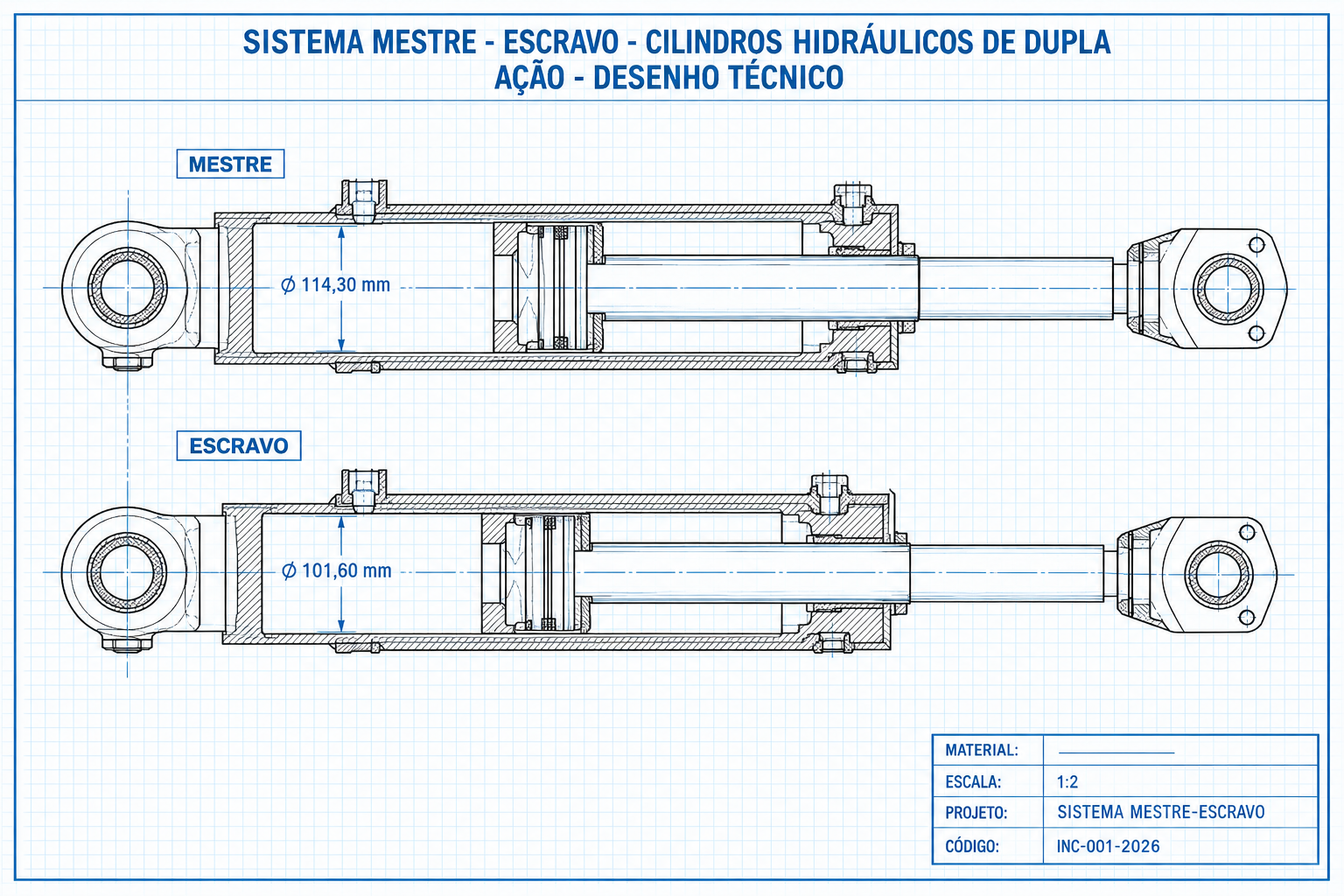
Master-Slave Hydraulic Cylinder: How Does Sensorless Hydraulic Synchronization Work?
Understand how master-slave hydraulic cylinders synchronize multiple actuators without sensors, how to calculate master and slave displacement areas, and how this solution compares to flow dividers and electronic servo synchronization.
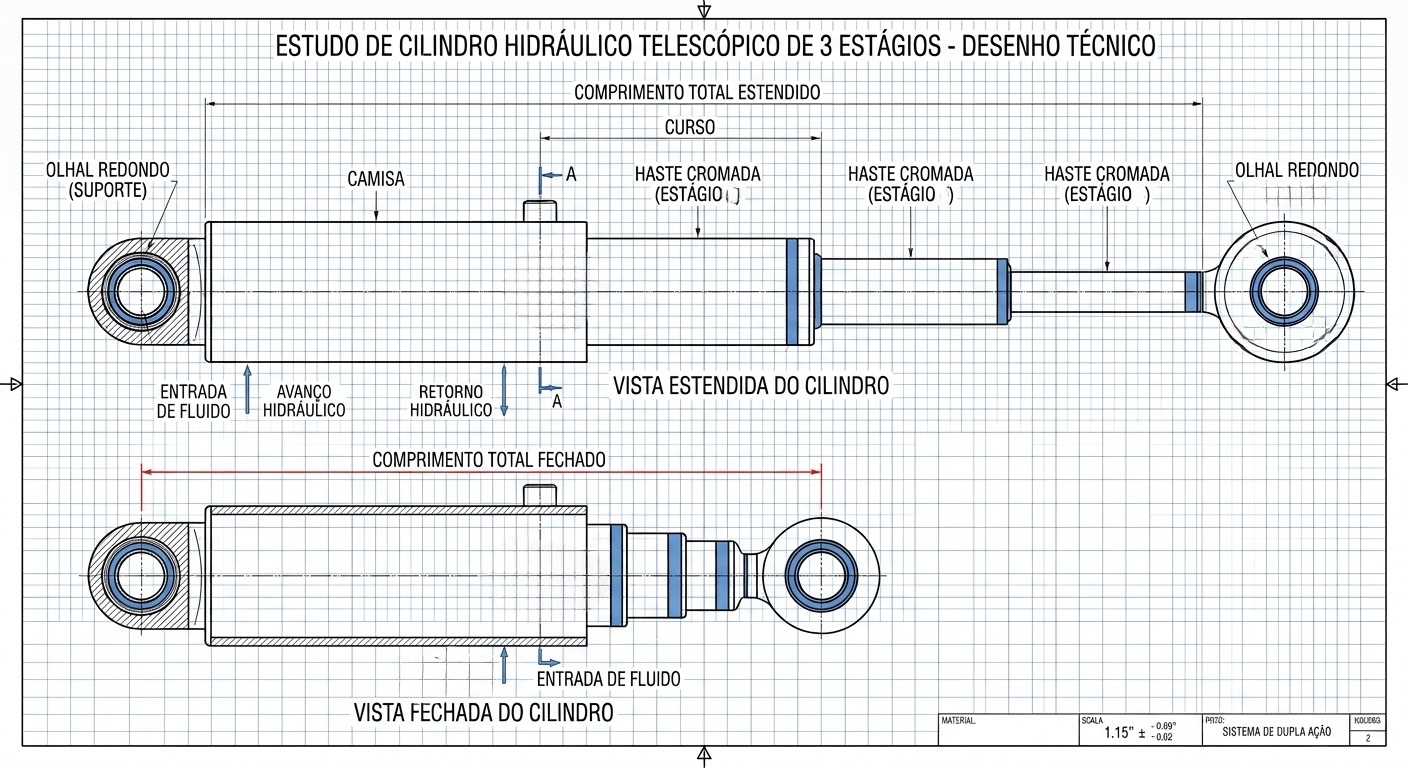
Telescopic Hydraulic Cylinder: How to Calculate Stroke, Stages, and Force at Each Stage
How to calculate total stroke, number of stages, and decreasing force at each stage of a telescopic hydraulic cylinder. Formulas, numerical example, and single vs. double-acting differences.
Single-Acting Hydraulic Cylinders: Types, Advantages, and How to Choose
A complete guide to single-acting hydraulic cylinders: learn the three types (Oil-over-Air, Buzo, and Ram), the advantages of each construction, and how to choose the right model for your application.